
IT Band Tightness: Stop Foam Rolling and Try This Instead!
September 14, 2022 Mobility, Movement Education, Pain
Iliotibial band syndrome (ITBS) is one of the most common traumatic overuse injuries at the lateral knee, occurring in 12-25% of runners and 12.5% of cyclists, based on cyclic loading during both sports [1].
However, IT Band tightness doesn’t just happen to runners and cyclists! The function of the IT Band is very complex and tightness can affect people of all activity levels and abilities for a variety of reasons.
This blog will discuss what the IT band is, what causes pain in the IT band, the effects of foam rolling, and other ways to address the pain you may feel.
What is the IT Band?
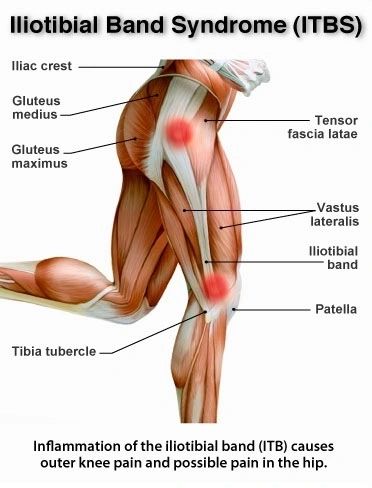
The IT Band is a strong, fibrous band of tissue that goes from the top of the outer part of the pelvis along the outside of the leg to the outside of the knee.
This tissue does not contract and relax like muscle. It creates an attachment site for many muscles of the leg and connects to several points on the knee including the lower leg bone and the side of the kneecap.
Additionally, muscles attach to the IT Band including: Gluteus Maximus, Gluteus Medius, and Tensor Fascia Latae (TFL). We will consider how these muscles interact, when we determine the best option for managing ITBS.
“Why Does the Outside of My Knee Hurt?”
Pain in the outside of the knee can come from a variety of sources. One source of pain in this location may be from irritation of the Iliotibial Band (IT Band).
This irritation is commonly believed to be from friction of the IT band rubbing on the outer bony prominences of the Leg bones during bending and straightening of the knee. The friction that is developed may cause small injuries to the tissue itself, resulting in inflammation and pain.
IT Band pain can range from mild soreness to debilitating pain that is described as burning, aching, tight, sore, and sharp. This pain is usually increased following activities that require the knee to bend and straighten repeatedly.
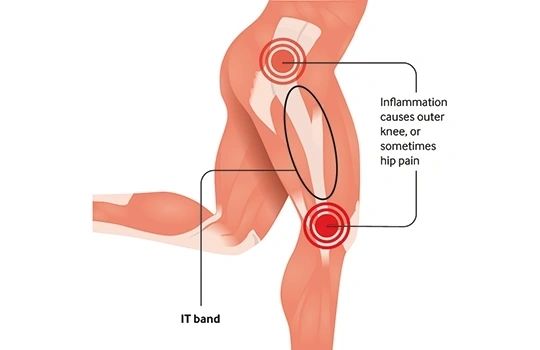
Pain is most commonly noted in the outside of the knee, but can also be present at the outside of the hip as well. Pain can be present in one knee or in both legs at the same time.
**Diagnosis of the cause of lateral knee pain can only be determined through assessment by a trained professional. This information is meant for educational purposes only.
https://www.bmj.com/content/364/bmj.l980/article-info
“Just Roll It Out”
If you have experienced this type of pain in the past, you may have been told to “roll it out”.
Have you ever tried rolling out your IT band?
If so, you know it HURTS!!
Foam rolling of the ITB is commonly prescribed for runners with either ITB “tightness” and/or ITBS (IlioTibial Band Syndrome).
However, changes in flexibility that result from foam rolling are short-lived or insignificant, and any pain relief resulting from foam rolling is temporary in nature, lasting as little as a few minutes[2].
While rolling the IT Band has shown some mild short term benefits in the length of the IT Band, research doesn’t support foam rolling the IT Band as a reliable treatment.
Also, when you consider the type of tissue we are dealing with, you have to wonder if we can really apply enough force to make a difference.
The IT Band can withstand forces of almost 200 lbs in some studies[3]!
Additionally, since ITBS is considered a compression syndrome, prescribing additional compression, via foam rolling not only lacks scientific support, but it may make ITBS feel worse [2].
What does all of this mean?
In order for foam rolling the IT Band to help at all, we have to put A LOT of force behind it, do it every day, AND we have to withstand the pain!
For some the pain just might be too much!
What Causes ITBS?
To understand how to treat and prevent ITBS, we need to understand the cause of the pain.
For each person that experiences ITBS, the symptoms may seem similar, but the reason each person experiences pain may vary.
Some commonly believed causes of ITBS:
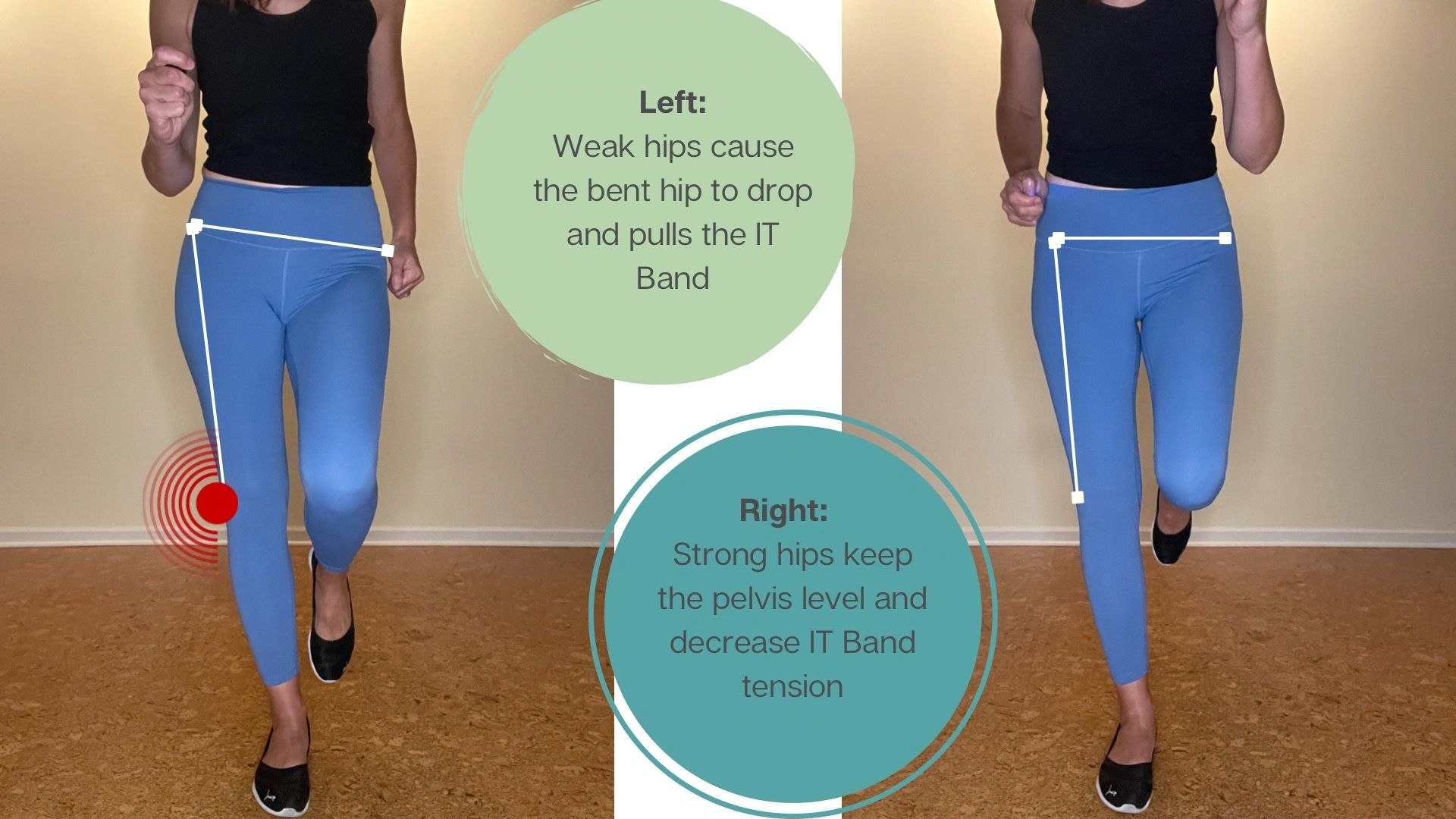
- Hip and core weakness - during single leg standing activities, our hip muscles keep our pelvis level, which reduces the strain on the IT Band.
2. Flat feet or poor arch support - Poor foot position causes the arch of the foot to drop to the floor and rotates the lower leg bone, which pulls the knee in and increases pull on the IT Band
3. Bowed legs due to knee arthritis-
4. Having one leg longer than the other - Differences in leg length will create a situation similar to that seen in hip weakness. The longer leg will creat an uneven hip position and stretch the IT Band.
5. Turning toes in when moving- Increased rotation of the lower part of the leg stretches the furthest end of the IT Band, causing tension at the knee.
Understanding some of these risk factors, is helpful when considering other ways to try to decrease pain from ITBS.
So how do you know what causes your knee pain?
**Only a trained professional can diagnose you with ITBS through a physical exam and testing. This information is for educational purposes only. If any of these symptoms sound like you, then seek out the care and advice of a medical professional.
What Should I Do?
Looking at the risk factors above, there are a few things that you can do to help prevent IT Band pain!
Work on hip and core strength: Improving hip and core strength may not completely eliminate your pain, but is a good practice for your overall health and continued mobility.
Below are some videos with exercises that are great for improving hip abduction strength.
Foam Roll! (It’s not all bad):
You read it right!
BUT, foam roll the muscles that attach to the IT Band instead of the IT Band itself. These muscles are more responsive to foam rolling and stretching AND are less painful!
Work on Balance and Stability to improve your hip control:
Good balance control is important in stabilizing the position of your pelvis during single leg standing activities like walking, running, and stairs.
Without this control, our pelvis drops on the stance side causing tension at the IT Band while also creating poor knee position which puts us at risk for injury.
What if I still have soreness?
Continued soreness in the outside of the knee for any reason, or increasing pain is a sign that you should seek out the help of a trained professional.
Physical Therapists, athletic trainers, and physicians are trained to diagnose ITBS, but also to identify the cause of the pain and tightness you feel.
Physical Therapists will treat your pain with various treatment techniques, correct your movement patterns, help progress your strength, teach prevention strategies, and some may also provide custom foot orthotics based on your needs.
With a good diagnosis and proper treatment, your symptoms can begin to improve quickly. Don’t wait until the pain makes your give up something you enjoy!!
If you feel like you need some help managing your symptoms, click on the link below.
Or visit www.thatsmypt.com for more information.

References
1. Ellis R Hing W Reid D. Iliotibial band friction syndrome - a systematic review. Man Ther. 2007;12(3):200-208.
2. Hutchinson, L.A., Lichtwark, G.A., Willy, R.W. et al. The Iliotibial Band: A Complex Structure with Versatile Functions. Sports Med 52, 995–1008 (2022). https://doi.org/10.1007/s40279-021-01634-3
3. Seeber GH, Wilhelm MP, Sizer PS Jr, et al. THE TENSILE BEHAVIORS OF THE ILIOTIBIAL BAND - A CADAVERIC INVESTIGATION. Int J Sports Phys Ther. 2020;15(3):451-459.