
Stop Stretching Your Hamstrings!!
July 11, 2022 Mobility, Movement Education, Pain, The Aging Athlete

Have you ALWAYS had tight hamstrings?
Does stretching seem to help only momentarily and it “tightens back up”? Or you feel like you never get much improvement?
So maybe you need to STOP stretching your hamstrings!!

I know this sounds crazy! “If I’m tight I should stretch!”
While some people truly have “tightness” or a shortened hamstring length, many times that “tightness” is related to something else. Without evaluating the reason for your “tightness”, we can not determine if stretching is the right thing for you to make improvements in your flexibility.
What is Hamstring Tightness?
The “hamstring” is a group of 3 muscles located on the back of the thigh. These muscles are the Biceps Femoris, Semitendinosis and Semimembranosis. The latter 2 muscles together form the inside hamstrings that connect from your “sit bones” to the inside of the knee just below the knee joint. The Biceps Femoris forms the outside hamstring and attaches from the “sit bones” to the outside of the knee just below the knee joint.
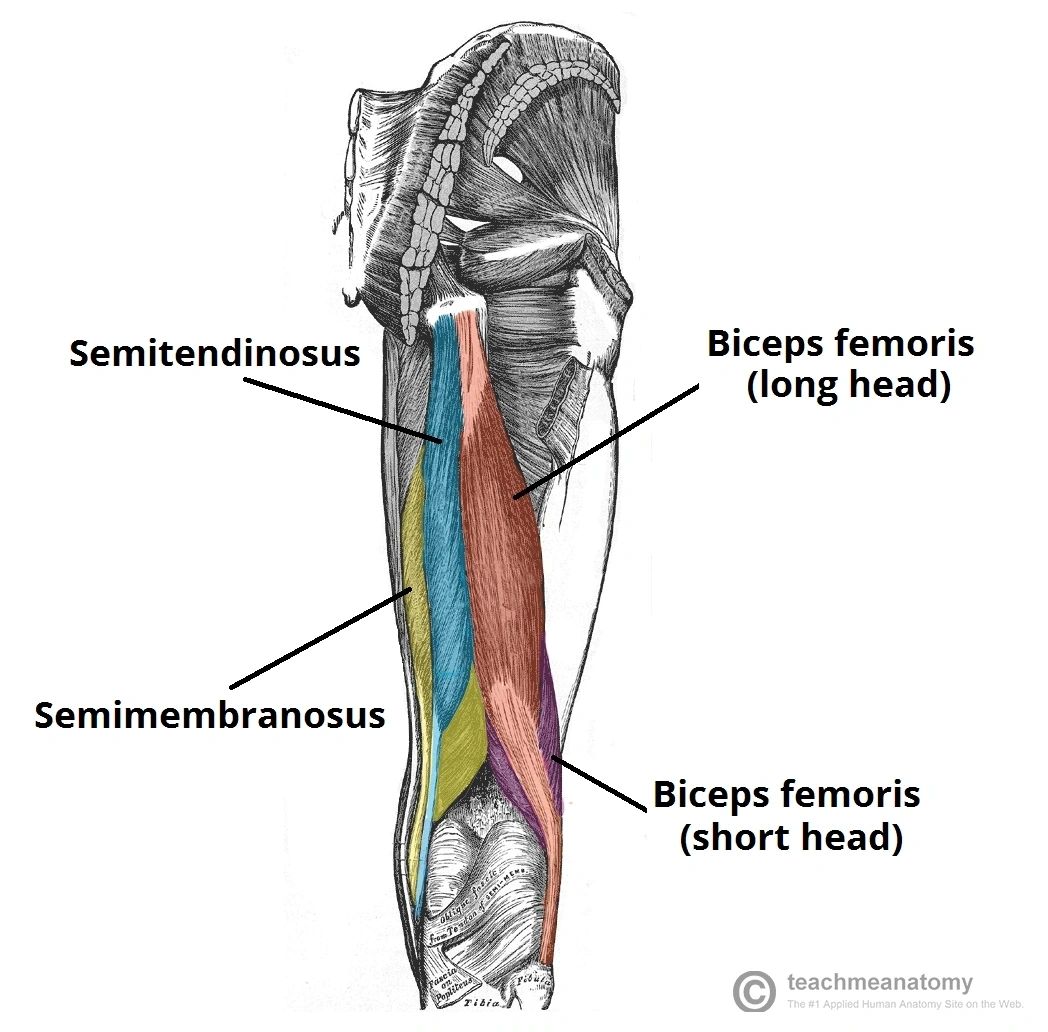
These muscles control knee bending as well as extend the hip. The hamstring plays a critical role in running, walking uphill, squatting down and controlling the lower leg as is moves forward during running and walking.
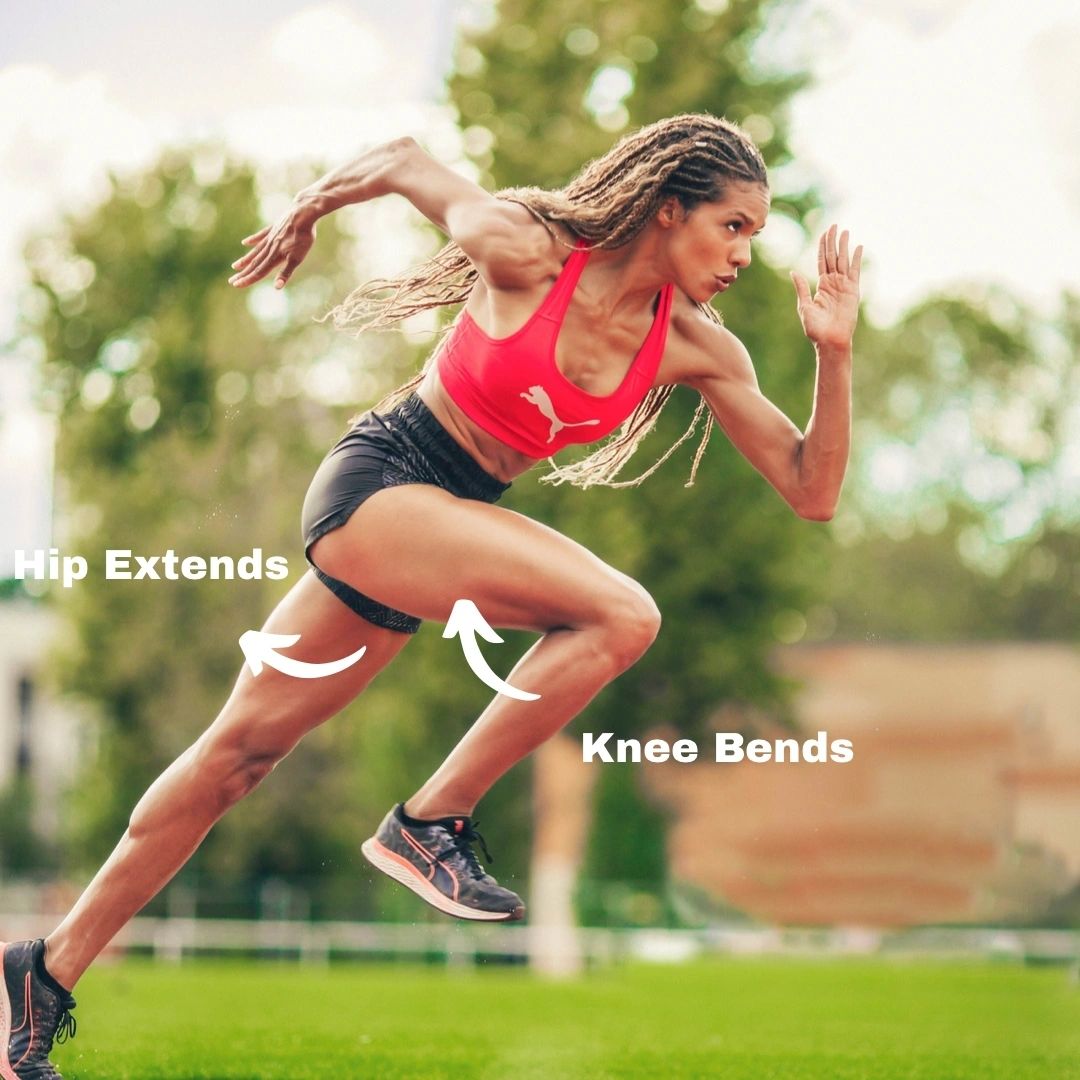
The hamstring also plays a role in supporting posture in standing and is tied closely to the position of your pelvis, which influences low back pain. True tightness in the hamstrings can limit your ability to bend forward when lifting without straining your back due to the position that it forces your pelvis to maintain.
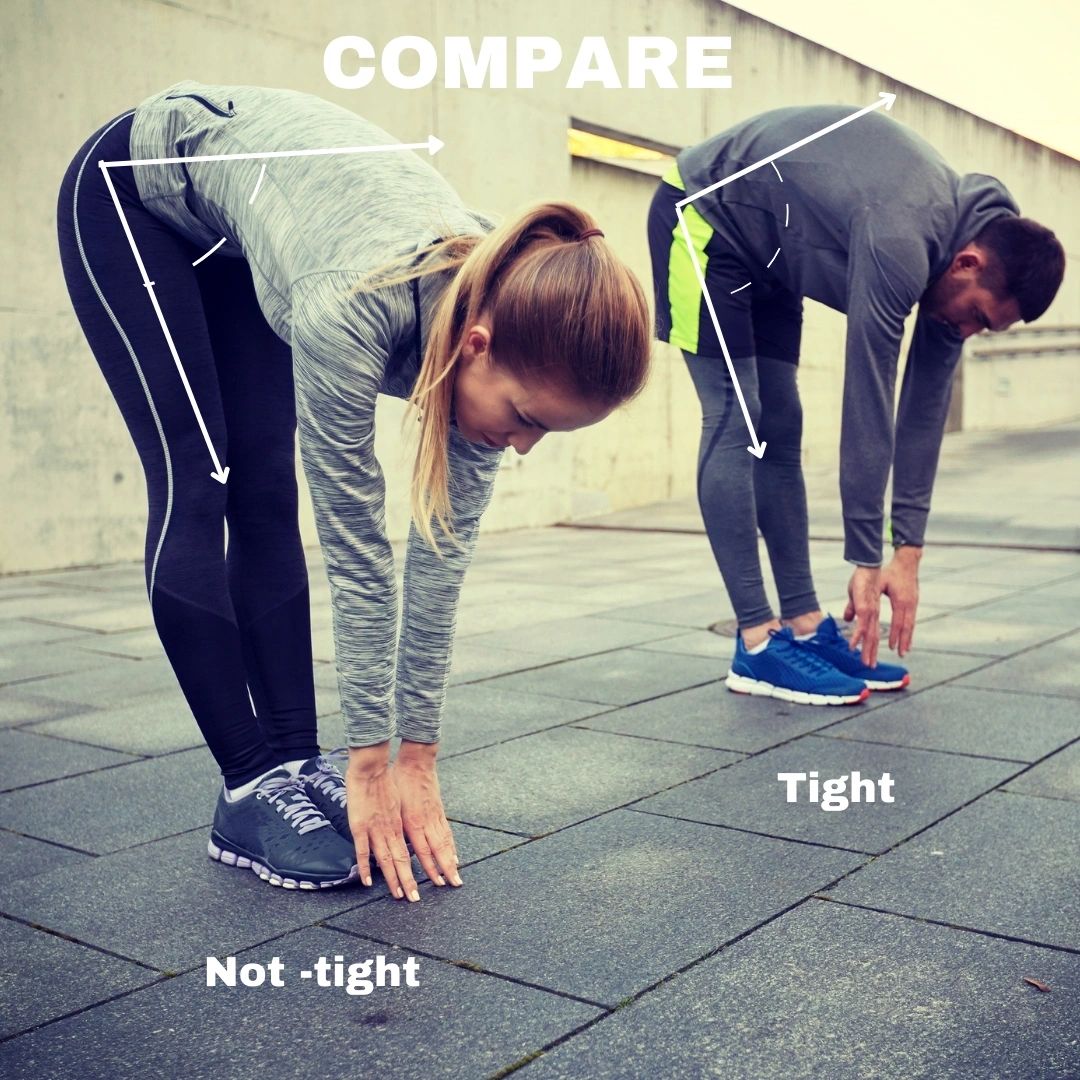
Looking at the picture above, you can see that the person on the Right has a much less hip motion and more rounding of the spine than the person on the Left. In order for each of these people to lift something when their knees are straight, without straining the spine, their back should stay in line with the white line drawn along their backs. That means that the person on the right could likely barely touch the tops of their knees if they were keeping a safe spine position when lifting with knees straight (Which is why we always say to bend your knees when you lift!! - but that could be another blog in itself!).
So you can see that if you truly have tight hamstrings, stretching and maintaining mobility IS an important part of spinal health. So I’m not saying to stop stretching completely…BUT…
What if all the stretching makes no difference at all? What if you keep stretching and you never feel any less tight?!
As Albert Einstein said, “the definition of insanity is doing the same thing over and over, and expecting a different result.” So are we “insane” to keep stretching? Maybe not insane, but we probably really don’t know the WHY of our hamstring tightness, which doesn’t allow us to approach the tightness with the right tools or methods.
What else could it be?
1. Nerve Tension
Our body has 45 miles of nerves that are all connected together. These nerves start in the brain, travel down the spinal cord, and then out through foramina (holes) of the spinal column and travel to all of our limbs. The job of these nerves is to give our muscles information about what we feel, but also tells which muscles to turn on to help us move.
In order for these nerves to reach all of the different muscles and areas of our body, they must travel down through the limbs and branch off at the muscles they supply. The journey from the spine to the individual muscles is long and complicated. There are muscles, fat and fascia (similar to the clear white membrane around a chicken breast) layers that the nerves travel through and within. When these layers of tissue do not move well, for a variety of reasons, then the nerves can not slide and glide between the layers as we move. This can cause the nerve itself to “bind down” to the surrounding tissues and every movement that would normally glide the nerve, now becomes a ”stretch” of the nerve.
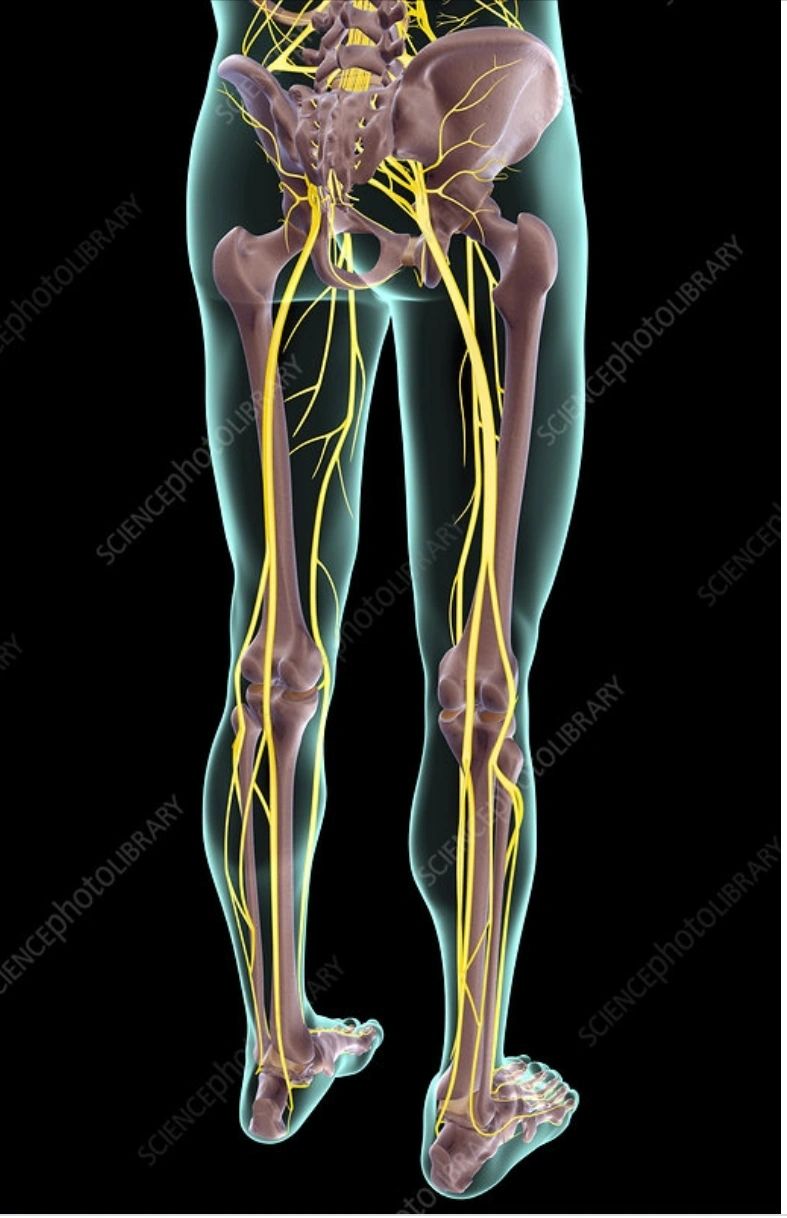
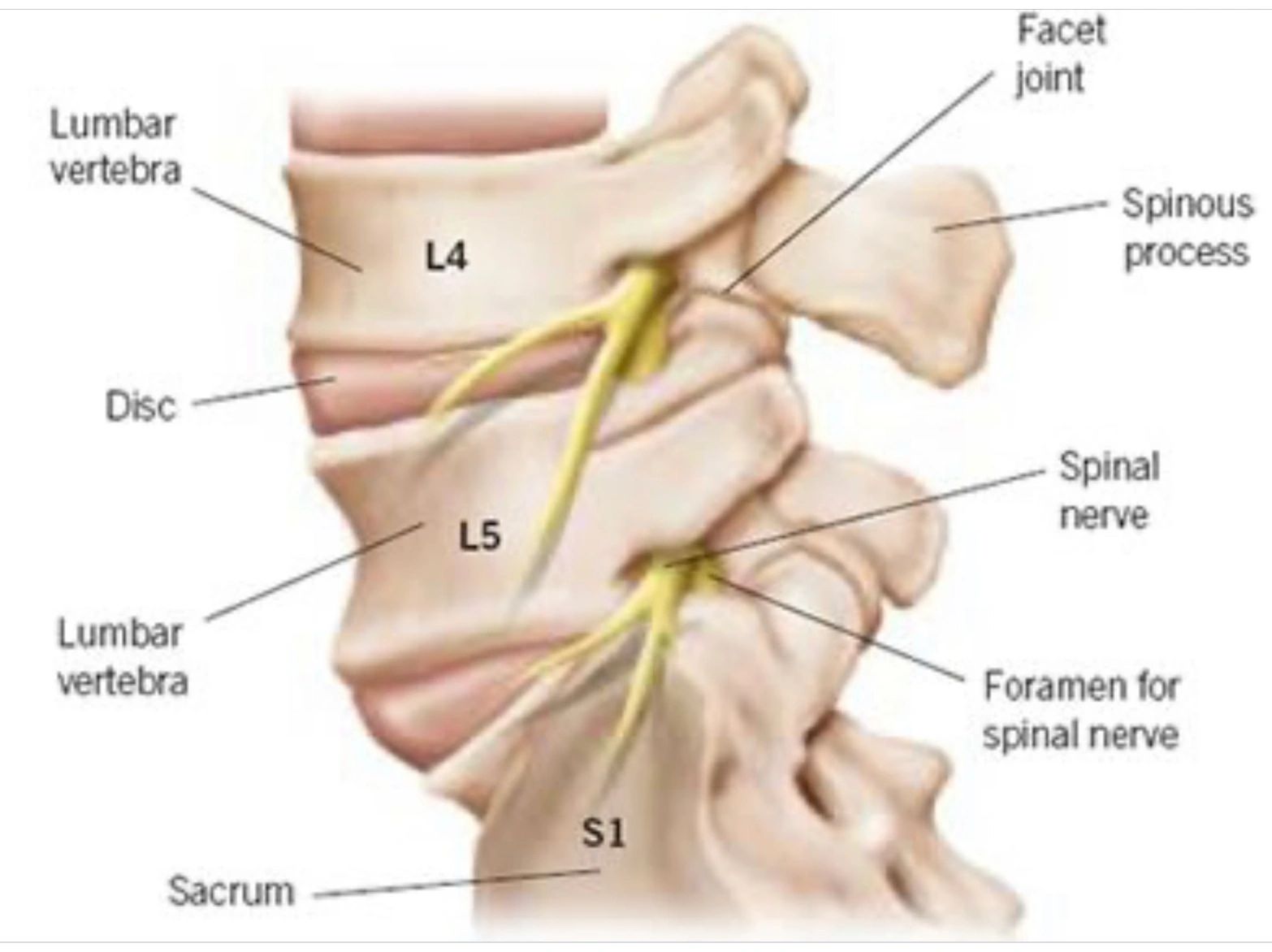
Nerves DO NOT “stretch”. In fact, they HATE to be stretched! So if the nerve becomes compressed, trapped, or pinched by any surrounding tissues on it’s way to the destination, it can create a feeling “pulling”, zinging, burning, or pain.
This is what happens with nerve tension in the back of the leg. The nerve that travels down the back of the leg can get “caught” where it leaves the spine, or under a tight muscle (like the piriformis), or it can get “stuck” to the fascia and not be allowed to slide and glide as needed. When this tissue gets “trapped”, it creates a feeling of pulling that is usually felt not only in the muscle we are trying to stretch, but also further down the limb. In the case of hamstring “tightness”, we feel tightness that begins in the hamstring with very minimal leg lift and the tightness usually is felt into the calf and even into the foot or toes. This “tightness” usually increases when pulling the toes up toward the shin and then radiates lower in the leg.
I’ll show you what I mean: TRY THIS
2. Core Instability
Core instability is caused by weakness of the deep core OR poor activation of the muscles of the deep stabilizers including the Transverse Abdominis (otherwise known as our girdle muscle). As you can see this muscle wraps all the way around the spine and attaches the rib cage to the top of the pelvis.
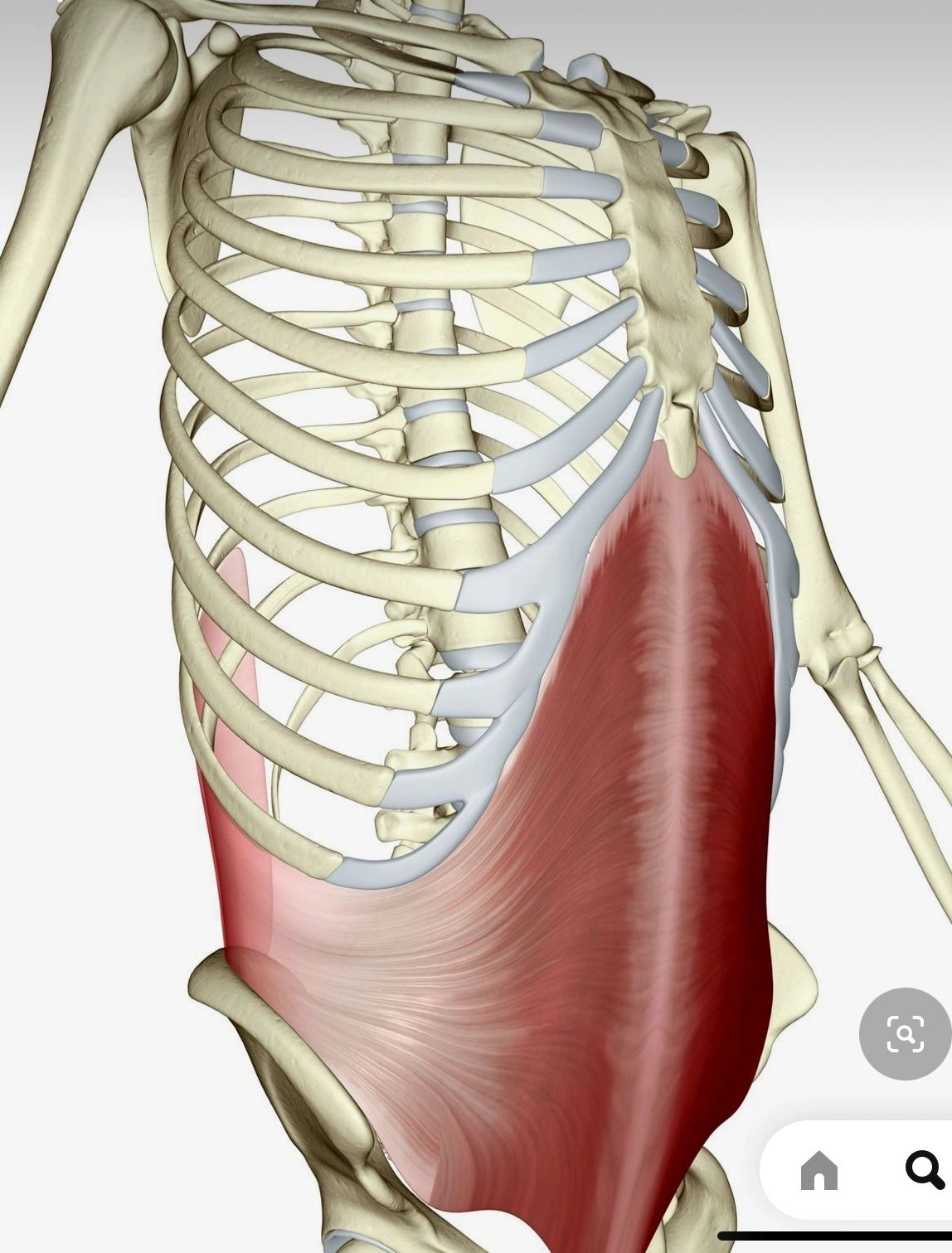
When there is tightness in the body, often times it is related to weakness that exists somewhere else. Hamstrings seemingly become tight when the core is too weak, or not activating properly to control the pelvis during forward bending. When weakness is present, the body will develop increased muscle tone that is perceived as tightness simply to survive [1].
How this works: The muscle spindle (a very tiny sensor) within the muscle tissue itself, is used to sense both changes in muscle length, and also changes in force on the muscle. The muscle spindle then sends a message to the brain telling it the position of the body, how far it’s moving, how fast, and how much force is being applied. Essentially, it is relaying the ACTUAL stiffness of the muscle tissue, but also the “Reflex mediated stiffness”. Which is excitability of the nervous system to protect the body from moving into a position that feels “unsafe” to the brain.
What did THAT mean? It means that if you can’t turn on your deep core, the brain will create tension in the hamstrings to stop you from bending very far to protect your spine.
Instability does not just affect those with ”weak core”. In fact, Cholewick and McGill have noted that the spine will buckle under relatively low loads if the activity of the deep core muscles is zero, even if the force in the large global stabilizers is substantial [2].
Summary: It doesn’t matter how strong your core is if you don’t know how to turn on the right core muscles!!
Targeting just the tightness alone without creating stability and strength somewhere will only produce short-term gains at best!
The video below is a good illustration of what happens when someone with “tight hamstrings” is actually unstable. **This video is for informational purposes only and cannot replace medical advice or evaluation.
Illustration of Instability: TRY THIS
3. Limited Hip or Spine Mobility
If you haven’t guessed it by now, everything in the body is connected! When one area of the body is feeling tight, painful, or just not right, then we need to look at all of the areas around it to identify the true problem.
The hips and spine can influence the feeling of tightness by requiring more from your hamstrings to make up for lost movement in other areas. If your low back or hip flexors are tight, it will pull your pelvis forward. This forward position stretches your hamstrings before you even begin to bend forward. If the spine can’t complete a rounded position, then it will make it difficult for you to touch your toes even if your hamstrings are loose.
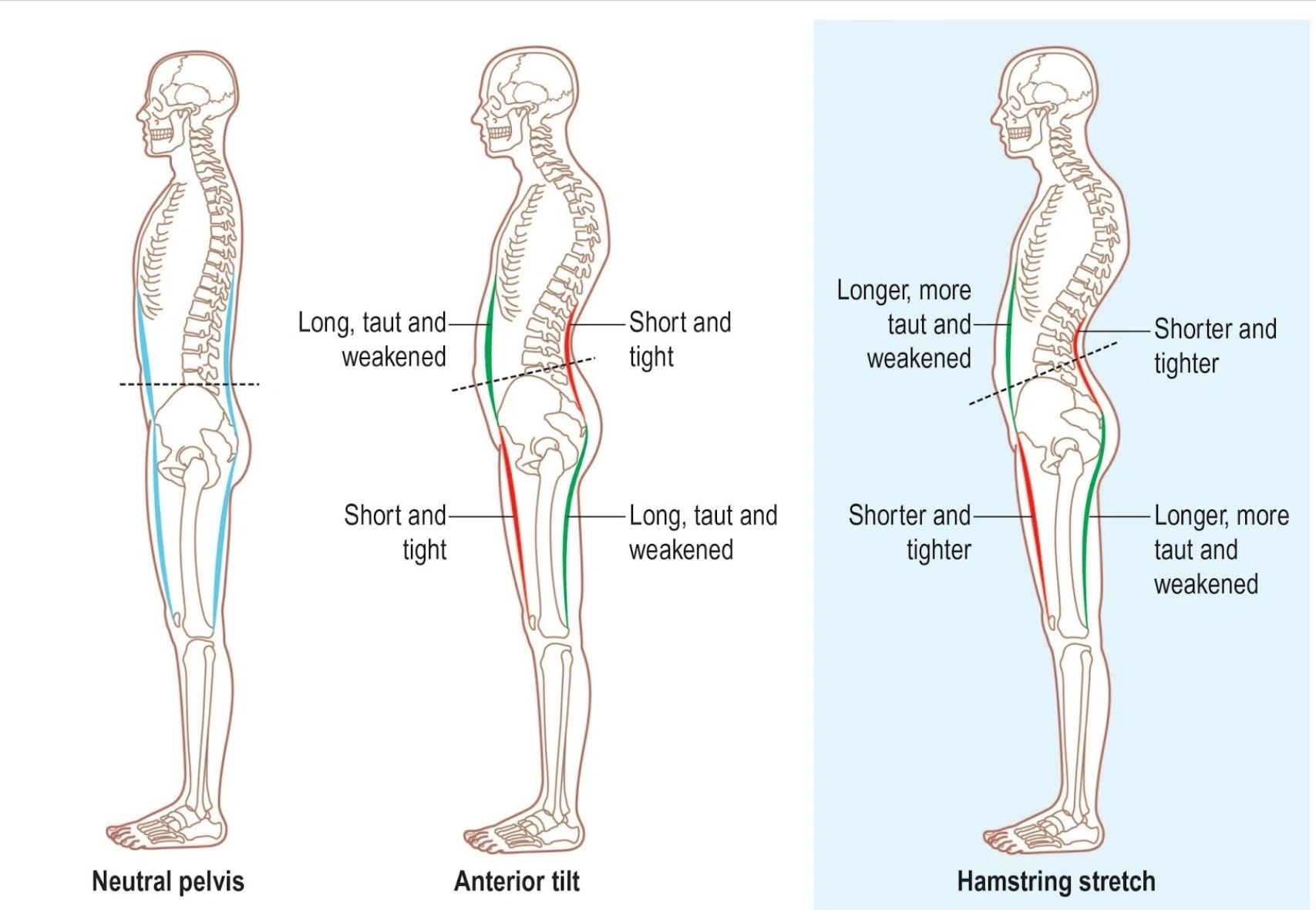
As shown above, in standing this depicts how the hamstrings are already pulled tight because the pelvis is pulled forward and arching the back. If you imagine this person laying on the floor and pulling their leg into stretch, they will likely feel tight in the hamstring quickly since they are already pulled into stretch!
So I Should Stop Stretching My Hamstrings?
I’m not saying that you should abandon stretching the hamstrings completely. Stretching and working on mobility overall is a critical part of sustaining longevity in your abilities to participate in life as well as physical activities that you love. Stretching even 2-3 days per week for 5-10 minutes has demonstrated good improvements in flexibility [3].
What I am saying is that if you are not getting the results you want from stretching your hamstrings, then maybe you need to dig a little deeper to find out why it’s not helping. Once you know why stretching isn’t helping you, then you can target that issue AS WELL as stretching.
What Can You Do?
See videos below:
- Be consistent with stretching and mobility.
- Stretch the muscles that surround your area of tightness.
- Incorporate core stabilization exercises into your workouts- (this does NOT mean crunches!!)
- Try nerve gliding as well as stretching
What If I Need More Help?
**The information above is for educational purposes only and is not meant to replace medical consultation or advice.
There are many factors to consider when determining why you have pain or tightness. The only way to truly determine if any of these techniques will work for an individual is to have a complete evaluation with a medical professional trained to evaluate the issues discussed in this blog.
If you have low back pain, hamstring tightness, or you just want to feel like you can move better, then contact MyPT!
At MyPT, Dr. Shana Blackman completes a 60 minute comprehensive evaluation of your movement, flexibility, and limitations. She then develops a treatment plan to address whatever needs are determined.
At MyPT, we focus on the whole person and preparing your body to achieve YOUR goals to get you back to what you love to do. No referral is required!
Because MyPT is a self pay practice, we can provide injury recovery AND prevention services without the restrictions placed by insurance! Don’t wait until you have to give up something you love! Contact MyPT and we can discuss how we can help you get started on the path to a pain free life!

References:
1. Voight, Michael L.,Selective Functional Movement Assessment: An Algorithmic Approach to Diagnosis and Treatment, Advances in Clinical Education & NASMI. 2011;2.
2. Cholewicki J, McGill SM. Mechanical stability of the in vivo lumbar spine: implications for injury and chronic low back pain. Clin Biomech (Bristol, Avon). 1996 Jan;11(1):1-15. doi: 10.1016/0268-0033(95)00035-6. PMID: 11415593.
3. Mayo Clinic Staff. (2022, February 12). Stretching:focus on flexibility. Mayo Clinic. http://Mayoclinic.org