What is Dry Needling?
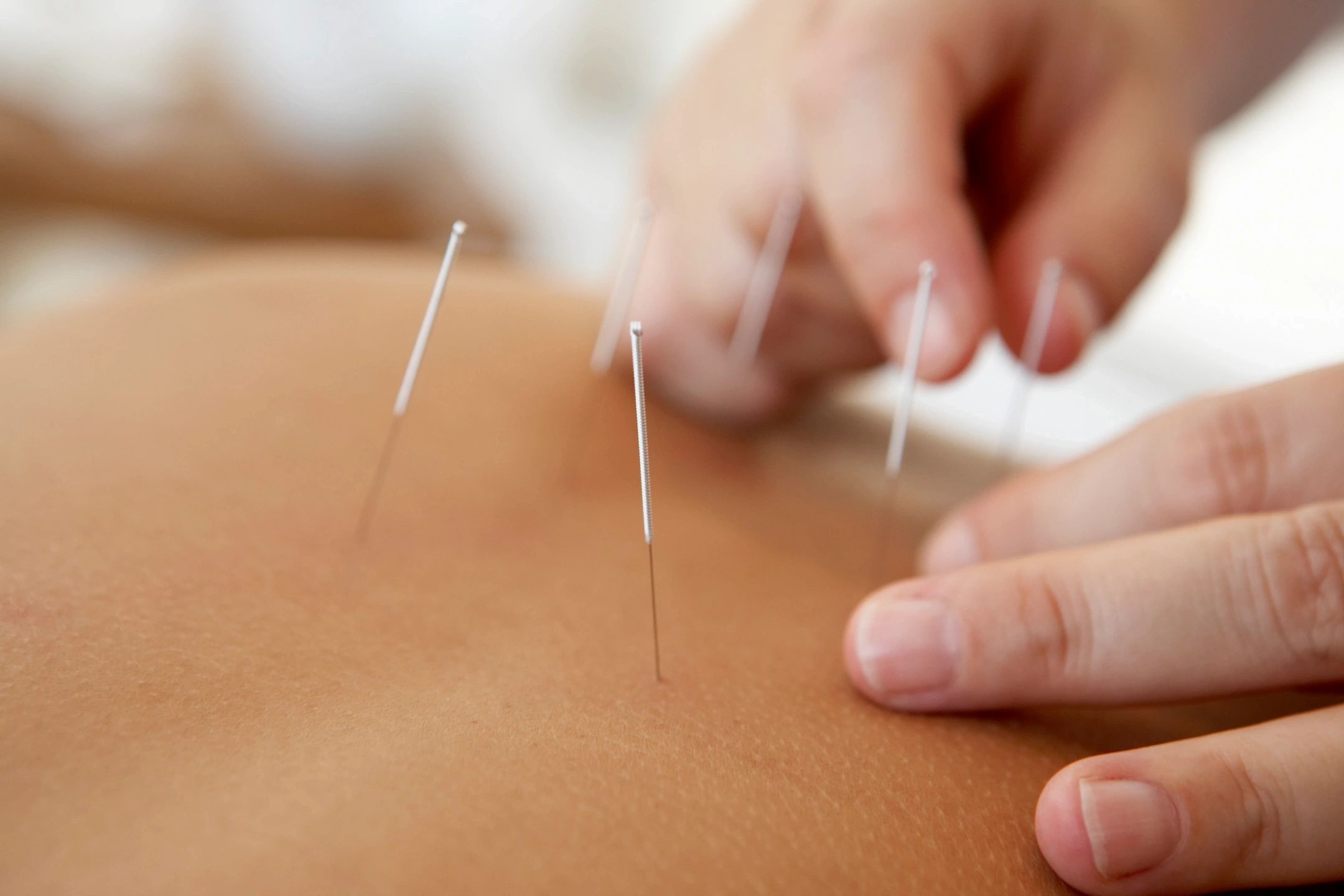
Dry Needling is a safe and effective treatment when used by skilled, trained Physical Therapists and other trained professionals certified in the technique. Dry Needling is used to release muscular "trigger points" by inserting a monofilament needle (really narrow) into the "trigger point". These bundles/bands of muscle tissue cause local and referred pain, restrict movement, and disrupt normal function.
In other words, we use a needle to get rid of stubborn "knots" in deep muscles, so that we can have pain relief and move more easily!
"Dry" Needling refers to the fact that nothing is injected through the needle. When the needle enters the muscle trigger point, it improves blood flow, provides pain relief and causes the muscle tissue to relax. This allows for greater movement and decreased pain.
Is Dry Needling the same as Acupuncture?
Dry needling and Acupuncture use the same needles, but that is where the similarities end, and the differences begin.
Acupuncture is based in Eastern Medicine practices while Dry Needling is based in Western Medicine. Training and uses vary significantly between practitioners.
Acupuncture is used for issues including stress management, weight loss, smoking cessation and a variety of other conditions.
In contrast, Dry Needling is utilized for specific muscle tissue release to decrease musculoskeletal pain and restriction, based on movement patterns, mobility assessments, and orthopedic testing.
*A patient can be treated with BOTH Acupuncture and Dry Needling in the same period of time with totally different goals and results.
Does Dry Needling hurt?
Though Dry Needling sounds a little scary, most patients describe their experience as manageable discomfort. As the needle is inserted into the skin you feel the poke of the needle. Patients then experience either a sharp sensation, a deep ache in the muscle, or a "twitch" of the muscle. All of these sensations are expected and indicate a usual desirable result.
Soreness may be present for 24-48 hours after treatment, and can be managed with stretching, ice, and heat. Some people experience an immediate improvement in mobility and tension or a gradual improvement over the next few days.
Is Dry Needling right for you?
Dry Needling can benefit a variety of musculoskeletal issues including: low back pain, hip pain, shoulder pain, neck pain, tension headaches, plantar fasciitis, and knee pain. However, Dry Needling provides the most benefit as a supportive therapy to other Physical Therapy techniques. It is rare that Dry Needling is used as a stand alone treatment.
When combined with soft tissue mobilization, myofascial release, neuromuscular training, and strengthening, Dry Needling can help to release deep tissues to a greater extent than other techniques alone.
Though Dry Needling is safe when applied by a skilled and trained professional, there are risks present anytime a more invasive treatment is utilized. You should discuss these risks with your provider.
Dry Needling may not be appropriate for people with certain medical conditions. It is important to consult a certified professional about whether Dry Needling is right for you.
Nagging aches and pains?
Tightness you can't get rid of?
Contact MyPT for an evaluation and see if Dry Needling is right for you!