
I can't sleep because of pain. Or is it the other way around?
June 21, 2022 Pain, The Aging Athlete
According to the National Sleep Foundations 2015 Sleep in America poll, 1 in 5 Americans suffer from chronic pain. The majority of people with chronic pain report having poor sleep quality, and many are diagnosed with sleep disorders. Does this sound like you? Every day I am answering questions about pain and how to sleep better despite pain. Pain makes it difficult to find comfortable sleep positions and gets people taking drastic measures including searching for a new mattress!
What is chronic pain? - Chronic pain is pain that has been present for an extended period of time, and can last in the body long after the original injury has healed. Chronic pain can be present for many reasons and is common with arthritis, low back pain, and fibromyalgia.
Poor sleep and pain have changed my life
When the pain is disrupting sleep several times a night is when my patients start talking about pain medication, getting a new mattress and how it’s affecting their lives. Having a partner tossing and turning all night trying to get comfortable is very disruptive to the sleep of both individuals in a relationship. It may even send one person to sleep in another room, on the couch, or even in a chair! I am shocked every day when my patients report that this is what their sleep has come to before they sought treatment. Or worse, they don’t mention it because it has become so normal that they have accepted that is how they must sleep!
Why does it hurt when I sleep?
This is a complex question with a lot of different answers.
One part of the answer is that sleep quality influences pain levels. Research has shown that people with fragmented sleep, short sleep times, and poor sleep quality often show a hypersenstivity to pain (Tang, et al 2015). People with poor sleep habits may also be at a higher risk of chronic pain conditions like migraines and fibromyalgia.
The second part of the answer is More physical in nature.
Pain with sleep and upon waking can also be influenced by muscle tightness, spine position, and injury.
As a society, we spend more and more time sitting at our desk on zoom, driving in cars, sitting in airplanes and relaxing at night watching TV. This sitting position causes the muscles in the front of our hips to tighten. Then when we lay down flat, it pulls our pelvis forward causing an arch in our back. This pressure through your the night can become very painful.
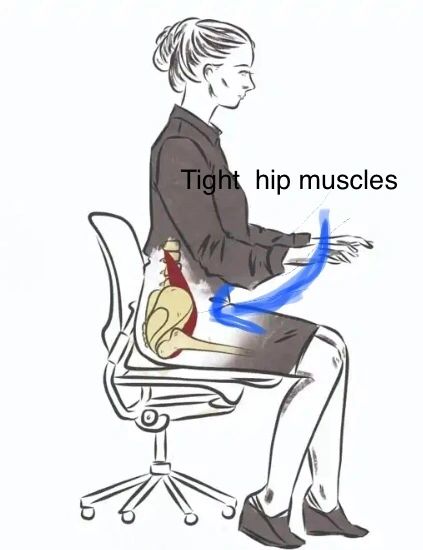
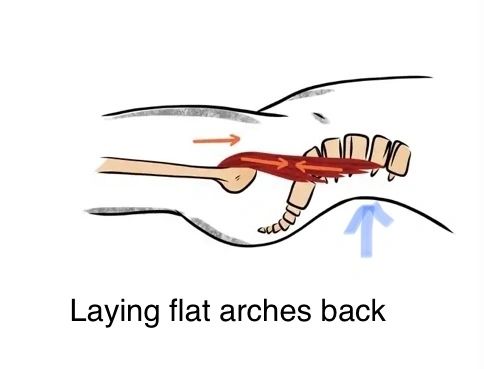
Spine position in sidelying can also influence our pain. Due to the curvature of our body, when we lay on our side the spine bends and twists. Supporting our sound to keep it neutral at night can help alleviate some of these symptoms.
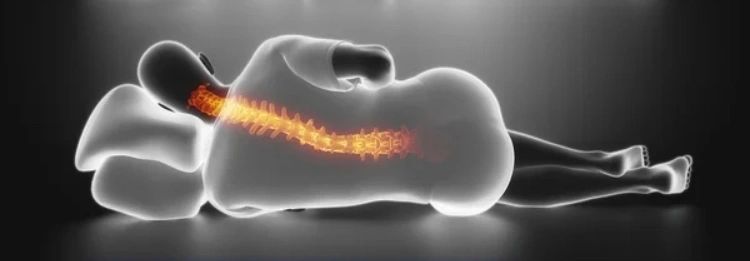
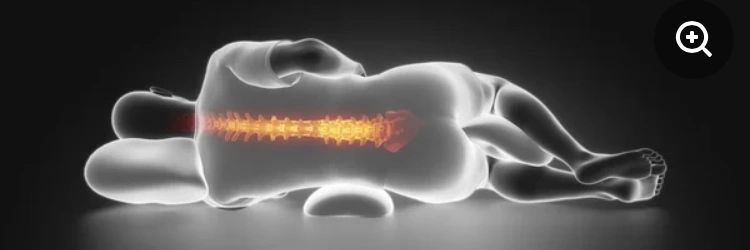
So which one is it? Is it bad sleep causes pain...OR does pain cause bad sleep??
Classic Chicken or the Egg... The answer to this question is like many other things in dealing with pain. We don't really know because each affects the other! Let's look at a few of the overlaps.


Poor Sleep .........Pain........Poor Sleep........Pain
Mood changes - Increases Anxiety and Depression that can increase pain. Pain increases levels of depression and anxiety as well, which will limit sleep.
Heart Health - Sleep is the chance for our hear to rest. Our blood pressure decreases as well as heart rate during good sleep. Pain increases blood pressure, so it has the same negative effect on the heart.
Regulated Blood Sugar - People with poor sleep have an increased risk of Type II Diabetes. The body's resistance to insulin increases without sleep.
Decreased Memory and Thinking - Sleep allows time for our brain to grow, repair, and form new connections with our body. Poor sleep decreases this repair time and also decreases memory and our ability to make clear choices. Pain is processed in the brain and when new pathways cannot be formed during sleep, our brain continues to send the same pain signals, which is chronic pain.
Decreased Immunity - Our body releases growth hormones when we sleep. These hormones heal and repair tissues as well as help our bodies fight against infections. Illness is often accompanied by pain.
Increased Stress - Stress can be increased by the feeling of poor performance due to feeling tired and having difficulty with focus and attention. Pain also creates stress due to fear and anxiety of having pain with daily activities.
Decreased Athletic Performance - Good sleep increases the release of growth hormones which help with growth and development as well as tissue repair with injuries. Sleep also decreases focus, which affects awareness during performance as well as increases fatigue. This in turn may increase risk of injury.
Changes in weight - During sleep, our body increases the production of a natural appetite suppressor called Leptin making us less hungry. In turn sleep also decreases the production of a natural appetite stimulant called Ghrelin.
*https://www.sleepfoundation.org/physical-health/pain-and-sleep
What can I do to help my pain AND my sleep?
Based on what we know from the information above, it is important to treat both sleep and pain. So lets focus on how we can affect sleep, while also working on making sleep as comfortable as possible. Many times getting to sleep is difficult due to pain that we experience when we lay down after a long day of work and activity. Below is a list of 10 strategies to improve sleep as well as how to find the most comfortable position for sleep!
10 ways to improve sleep
- Set a time to go to bed - before 11pm - and use a routine each night
- Wake up at a similar time each day
- Darken and cool the room
- Place a notepad and pen next to the bed to write down things that are making your mind race so you can "park your ideas".
- Deep breathing, relax, meditate, or read a book before bed - calm the nervous system to decrease pain sensitivity
- Avoid checking email and messages before bed
- Eliminate naps. If naps are needed, limit them to power naps of fewer than 20 minutes
- Avoid caffeine in the late afternoons or evenings
- If you have pain, get up and move around and distract yourself for a while. Then lay back down to try again.
- Exercise during the day!!!
How to make Sleep Positions Comfortable
It's not necessarily your mattress, it may be based on tightness from daily activities that limits how you can lay on your mattress. Many of us spend time sitting while working, driving, or "zooming", during the day. This posture puts pressure on our spine all day and tightens the muscles in the front of our hips (hip flexors). Then we lay down to rest and the tightness puts our spine in a position that creates pain and pressure. Here are 3 positions that support the spine, decrease muscle tension to remove pressure on the back.
What if you still need help?
So before you go out and buy a new mattress, try some of the tips above!
If you have tried these tricks and you are still having pain that keeps you from sleeping, then contact Dr. Shana Blackman at MyPT. Dr. Blackman will evaluate your pain, movement, and daily habits and discuss options to getting you back to sleeping better!
If you want to discuss options with Dr. Blackman, contact her through the link on MyPT or call at 414-732-3160.

Tang NK, Goodchild CE, Sanborn AN, Howard J, Salkovskis PM. Deciphering the temporal link between pain and sleep in a heterogeneous chronic pain patient sample: a multilevel daily process study. Sleep. 2012 May 1;35(5):675-87A. doi: 10.5665/sleep.1830. PMID: 22547894; PMCID: PMC3321427.