
Shoulder Pain: What Is That Pinch?
June 13, 2023 Mobility, Movement Education, Pain, The Aging Athlete
Summer is finally here!!
With the change in weather comes the change in activities for the summer!
Often when summer comes, it’s not just the sports that change, but also the amount of time that we spend doing those sports!
We’ve been trapped inside all winter and the first volleyball triples grass tourney has finally come! But it’s not just one match, it’s 5 in one day!!
OR
You don’t just golf 18 holes, you extend to 36 in a just a couple of days!
OR
Baseball tourney season begins and pitchers are throwing max pitches allowed “per the tourney rules”.
OR
Your tennis league that you have been waiting for is starting up and you play the toughest team first, so you can’t wait!
In all of our excitement to get back to enjoying the sun and the outdoor activities we crave all winter, we sometimes forget that our body hasn’t done some of these movements in months!
The high intensity and movement change can be A LOT for our body to handle!
“Maybe I Did Too Much?”

You wake up the following Monday and your shoulder feels sore.
But “soreness is normal…Right?”
The soreness is better in a couple of days, so you get geared up for the next weekends tourney and you are just a little stiff.
“I’m sure everything is fine…Right?”
After the next tourney, you feel stiff when you wake up, but it lasts throughout the day and soreness is now interrupting sleep.
“I’ll just play through it and I’ll get used to it…Right?“
Soon the soreness is present while you play, after you play and even before you play!
So you rest your shoulder for 2 weeks and then go back to activity.
But that first game that you play, you realize quickly that the pain is still there and now you have soreness in your neck and arm!
Suddenly, your excitement for summer turns to frustration as you feel that you have to stop playing so that you can heal.
Now it hurts just to put your shirt on or reach into the back seat!
Shoulder pain that persists can be due to a variety of factors!
After reading this blog you will learn a little more about the following:
- Common causes of pinching in the shoulder
- 3 ways to decrease the pinch in your shoulder
- Ideas of how to prevent these injuries from happening!
What Is Causing My Pain When I Reach Overhead?
Pain with reaching overhead can be due to many different conditions.
Common injuries that cause pain in the shoulder include: Rotator cuff injuries, labral injuries, and subacromial impingement syndrome (SIS).
These conditions can happen to anyone due to normal wear and tear over time. However, they are also a common complaint in athletes that play overhead sports.
Shoulder impingement is especially common in overhead athletes, and accounts for 44-65% of all shoulder complaints in this group of people [1].
Shoulder impingement commonly is reported as a ”pinch” at the top of the shoulder as you lift your arm overhead.
The cause of the impingement has many factors [1]!
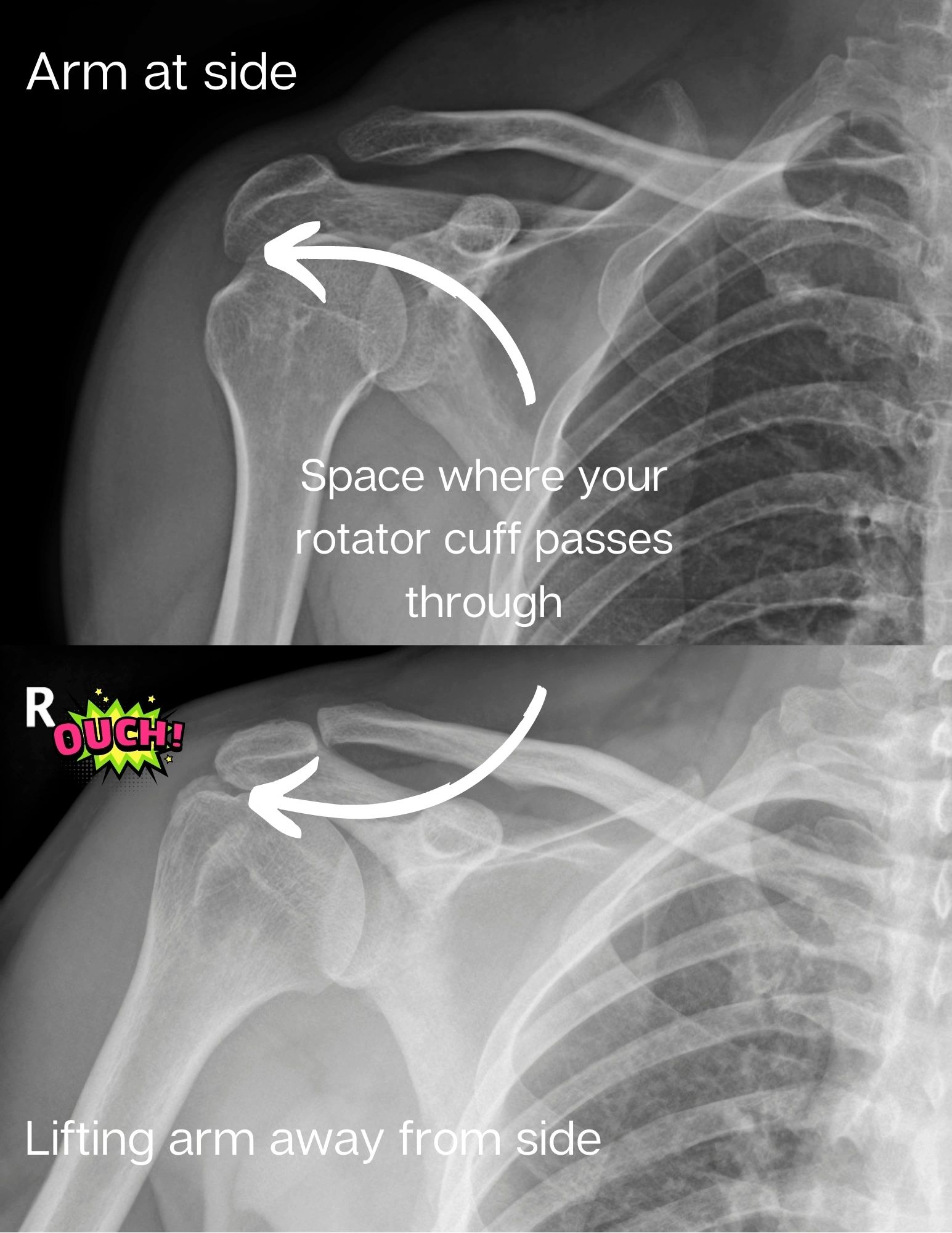
- Compression between the bones to pinch the muscle
- Weakness or dysfunction of the rotator cuff
- Tightness of the shoulder muscles
- Muscle Imbalances
- Shoulder Instability
3 Most Common Mistakes We Make That Increase Shoulder Pain
Let’s consider the story above to see what mistakes may have influenced the presence of an injury that has limited our participation in what we love.
1st: Too much too quick!!
When we are young, our bodies can adapt more easily to big changes in activity. That has to do with changes in our aging tissues, but also is heavily influenced by the daily activities that we do all day as adults.
When we are children, we got to school, play at recess, go to sports practices, lift weights and go to the gym for hours, lay on the floor in our rooms, wrestle and play with siblings, walk and bike everywhere, etc….
How does this contrast with what we do all day as adults? We sit at work, we sit when we drive, we sit and watch our kids play, we go to the gym 2 days/wk, etc…..

I don’t know many adults that have the luxury of doing all of the extreme movements all day during “life” like we did as kids.
The ability to constantly be moving our bodies and challenging our tissues to move and stretch in more extreme ways, can influence how we respond when we have a big change in our level of Intensity and the type of activity that we do.
2nd: Ignore the pain
Pain! What pain?
Pain is the brain’s way of telling us that something isn’t right!
So ignoring pain can often result in greater injury.
Don’t get me wrong, no matter how much training you do, sometimes you will be sore or even painful!
So does that mean that every time you feel pain, it is a sign that you are causing damage to your body, or that you should stop activity?
NO!
The key is to understand the difference between soreness and pain.
Soreness is uncomfortable, but does not make you change how you move. Soreness is “normal” and expected with a change in activity. Recovery from soreness is usually quick, with very little intervention.
Pain makes you stop or change how you are moving. Pain is a sign that your tissues are not quite ready. This is usually followed by a slow return to normal and may require a stoppage of the activity or other interventions.
Often when we ignore pain, our body finds another way to accomplish what we want to do by using other muscles and joints surrounding the painful area.
This is called a compensation.
A compensation is our bodies ability to use other muscles or joints to complete the same task while allowing the painful areas to rest and heal.
Though compensations are an amazing adaptation that our bodies have, they increase the area of pain over time. This happens because muscles and joints are doing a job they are not built for.

For Example: You injure your shoulder and now your neck and low back try to help lift your arm. Now a simple injury becomes a more complex issue.
3rd: Passive rest vs Active rest
How many times have you had an injury and been told to RICE?
Rest, Ice, Compression, and Elevation
While immediately after injury, this has long been accepted as the best way to manage pain, it has very limited benefit in long term recovery.
Commonly when this happens, many of us will just take some time off and after we rested, we will go back to our activity.
For an active person, this is NOT the best form of recovery and will often result in compensations, additional injuries, or return of your current pain.
For example: If you are consistently doing bicep curls at heavy weight and you stop completely for 3 weeks, would you go back to lifting heavy the first time that you lift again?
If you do, likely you will feel weak or painful if you do. Complete passive rest, though sometimes necessary, results in weakness and decreased neuromuscular control. So if you get an injury, does it make sense to completely rest and then try to return to the same activity at the same intensity after weeks of rest?
Likely it will result in pain, inflammation, reoccurrence of injury or the formation of a new injury as your body changes how it moves to avoid the weakened area.
Active rest activities for the shoulder may include:
- low impact cardio (swimming, biking, etc)
- supported range of motion
- gentle isometric strengthening
- strengthening of biceps, and scapular muscles
- core strengthening
However, If your pain has lasted > 2 weeks and your pain has not decreased, then seek the advice of a medical professional such as a physical therapist (PT) to give you a proper diagnosis and treatment plan.
Treatment by a PT is the gold standard of care for shoulder impingement. Use of a variety of treatment techniques gives the best results [2] and PT provides a custom plan based on your injury and helps you reach your goals.
While avoiding these 3 pitfalls is a great way to reduce pain after injury, the best method of reducing shoulder pain is to PREVENT IT!
3 Tips To Prevent “The Pinch”?
1. Train for your sport even when you aren’t consistently playing it!
Train to match the intensity of your activity prior to a transition. This will help to prepare your body for that quick adjustment! Include exercises that work the muscles that you will use for overhead movement.
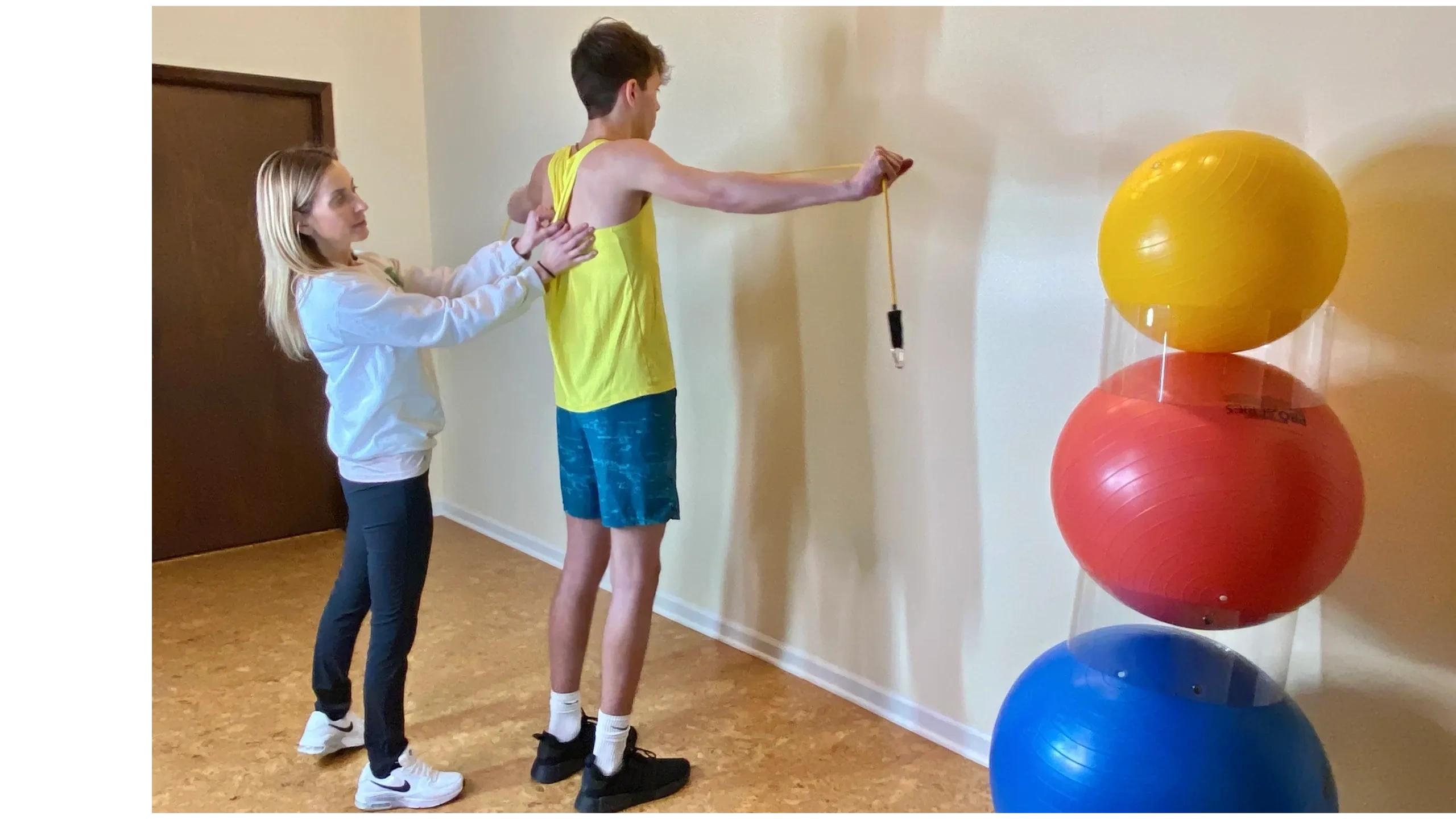
These muscles include the rotator cuff as well as the scapular muscles.
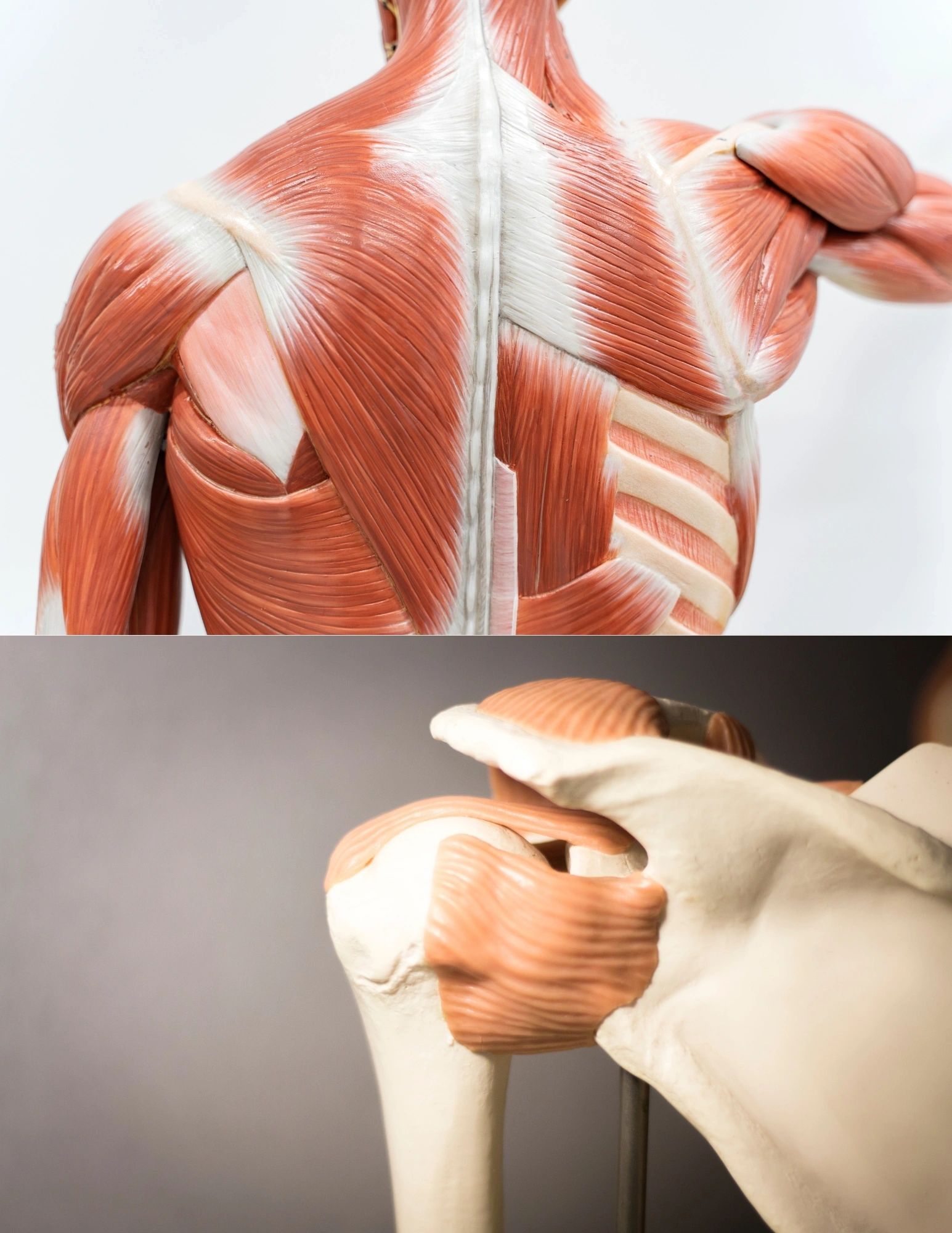
Scapular strength is the foundation for movement of the shoulder. The scapula needs to be able to move, but also to stabilize the shoulder for movement.
Often we will see poor scapular mobility and control when shoulder pain is present, especially with overhead athletes.
Not only working those muscles, but also working them in similar positions and at similar speeds to what you use in your sport is important.
Check out the video below for some exercises that focus on strength of the rotator cuff, scapular muscles and also emphasize stability.
If you have been training movements similar to what you do with your sport, then your body may be sore, but likely will recover quickly.
2. Develop a consistent mobility and flexility routine.
Focus on exercises that will counteract the position that you maintain all day at a desk, on your phone, or driving.
Areas to focus on:
- Upper back mobility
- Chest stretching
- Trunk rotation
Mobility of the upper back supports the position of your shoulder when you reach overhead. Chest tightness can pull the shoulder blades forward and decrease the space for the rotator cuff to move.
Check out these exercises, which help to reverse the effects of forward positioning we have all day while sitting at our desks, looking at our phones and driving.
3. Avoid overuse by following recommendations!
!!BASEBALL PLAYERS/PITCHERS!!
Now this could be a blog in itself!! But I really enjoy this article that is attached to the picture. It is a great resource for coaches and parents to get some information on protecting your child’s arm health.
*Click on the picture to go to an article with great information for pitchers!

Pitch counts are present for a reason!!
Pitch counts change based on the age of the child. These numbers are determined based on research which takes into account muscular development, the ability of the child to control their movement, and other factors. The goal of pitch counts is preservation of the shoulder long term.
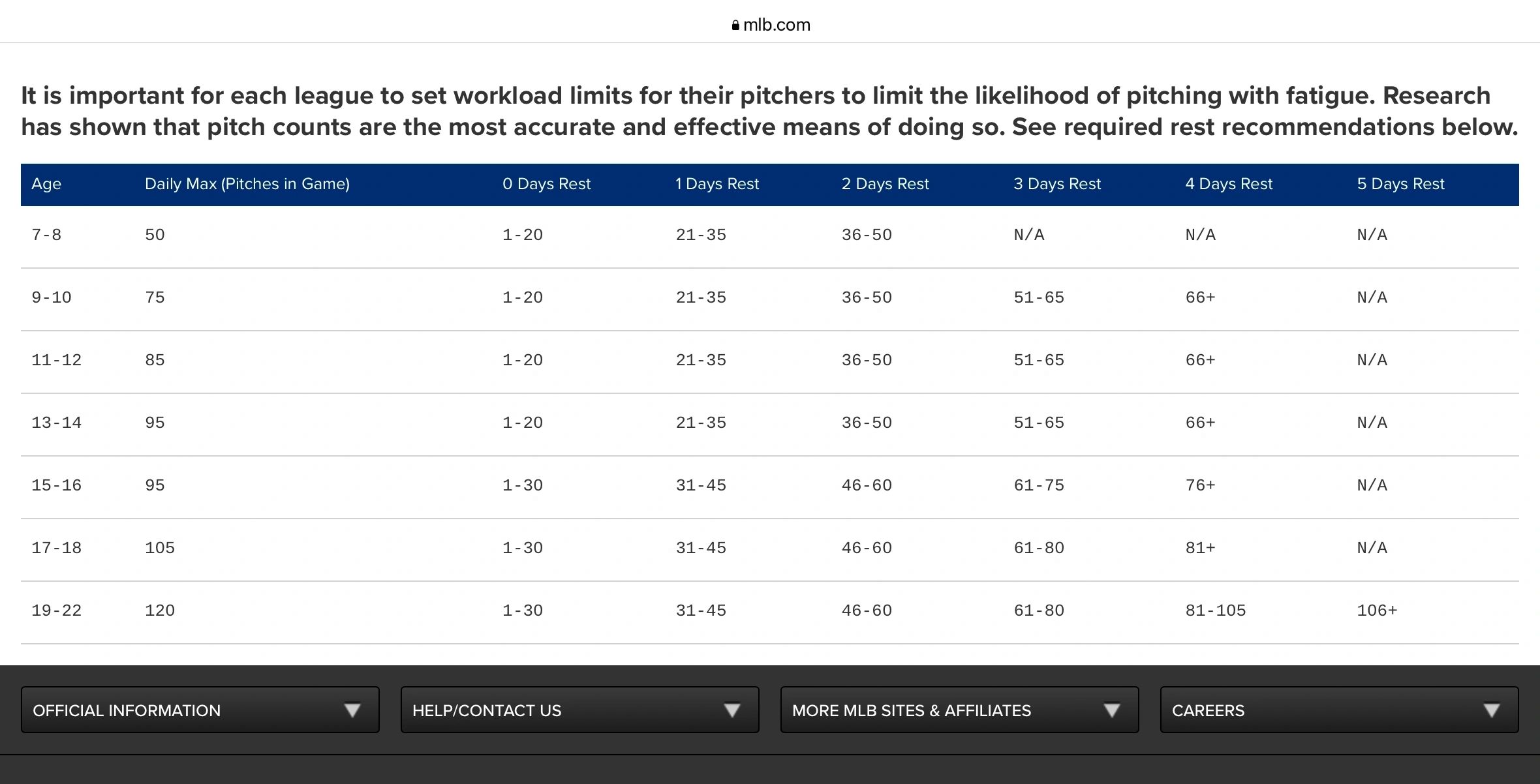
*https://www.mlb.com/pitch-smart/pitching-guidelinescommon
The biggest mistake that I see parents and coaches make is not taking pitch counts as seriously as they should!
Think of a shoulder as having a certain number of pitches available in a lifetime. The more the child uses when they are young, the less they will have when they are older.
If your child plays on 2 teams, then pitch counts above should be observed REGARDLESS of if the team you play on is enforcing them!
Likewise, if your child plays in a tournament, the pitch counts are different than league rules most of the time. Best practice is to follow the most conservative number to keep your child’s arm healthy.
While you may need a pitcher that can “get it over the plate”, this is very short term thinking for the health of the child’s arm.
I think I need help, what do I do?
If you want to move and get back to activity, but you are concerned about injuring yourself or you feel too painful to get started, then seek the advice of a Physical Therapist or other Medical Professional.
Physical Therapists are Doctoral trained movement experts that can diagnose and treat your musculoskeletal pain and injuries. At MyPT, Dr. Shana Blackman and Dr. Cathy Walls can help you figure out what is holding you back from moving and guide you back to a pain free active life.
At MyPT you will receive one on one care with your PT at all times! As a small private practice, we provide what YOU need and want and help you to reach YOUR goals. We develop a relationship with our patients and are available to answer all of your questions to the best of our ability.
We are happy to discuss what options might be best for you. Contact MyPT for more information.
We believe that every person should know their physical therapist! We want to be your PT!
Click on the link below to schedule an appointment, or visit MyPT.

MyPT, making pain relief reality!
References:
1. Bolia IK, Collon K, Bogdanov J, Lan R, Petrigliano FA. Management Options for Shoulder Impingement Syndrome in Athletes: Insights and Future Directions. Open Access J Sports Med. 2021 Apr 13;12:43-53. doi: 10.2147/OAJSM.S281100. PMID: 33880071; PMCID: PMC8053512.
2. H, Janakiraman B, Gelaw AY, Fisseha B, Sundaram S, Sharma HR. Effect of scapular stabilization exercise program in patients with subacromial impingement syndrome: a systematic review. J Exerc Rehabil. 2020 Jun 30;16(3):216-226. doi: 10.12965/jer.2040256.128. PMID: 32724778; PMCID: PMC7365732.